#rhizo14

On Community as Curriculum & Absolute beginners #rhizo14

Rhizo14

Just as week 5 draws to a close, I finally found the time to do some catching up on some ‘fiery’ blog posts, among which are Jenny Mackness’s and Frances Bell’s, and kinda grasped Jaap’s jokingly (or not) warning me about joining #Rhizo14 over half-way through as I did. Apparently, things got a bit messy in the scholar/ignoramus interplay, and funnily (or happy-go-luckily) enough, I myself made a comment on FB in which I expressed my astonishment at the degree of erudition I’d been encountering in the course. I had no idea at the time I made the comment that all that frisson had been developing, although I began to grow suspicious that there was something in between the lines of the hush-hush tone of the replies to my ‘erudite’ comment. “Down with the power structures!” was my humorous reply to the thread. I hadn’t yet lost my innocence at that time. I have now…

Little did I know that, at the moment of my verbal fist, I’d already been tapping into an underlying issue regarding the very nature of Moocs – that which in the context of TEFL we refer to as a mixed-abilities/mixed-levels groups. How does one go about teaching any curriculum to a group of absolute beginners, plus a couple of lower-int, upper-int, and a handful of near-native speakers (a CEFR letter soup, literally)? That, to me, seems to bear some resemblance to what I’ve been experiencing with you guys, among whom I’ve found myself to feel like an upper-int student (at best!) Taking this course with such a richly varied collection of individuals is an absolute privilege, and one hell of a ride, I tell you. I have been exposed to more hard-core theory in this course than I ever was, say, taking Anthropological Theory 2 back as an undergrad. Not that I was able to decode a lot of it, but still, as much as I, too, feel a bit ‘cold’ when theorizing ensues, I also appreciate the fact that these guys are exercising their vast academic knowledge and I’m getting to be an avid listener, sometimes even an interlocutor in my own terms, of course. I deviate a bit… but back to the point I am trying to make here, it takes one extremely self-confident, experienced and flexible individual to fulfill the role of the ‘teacher’ in a group of this nature.

Again in the universe of TEFL, having a ‘misplaced’ student in a group may generate an array of issues, one of them being that an obvious approach from the part of the teacher will need to involve catering to that specific learner’s needs, customizing the input and trying out different approaches to see which one will engage that learner and hopefully bring about some learning. How would that play out in a massive open online course, in which “absolute beginners” find themselves shoulder to shoulder with “educated native speakers”? Easy. Instill a sense of community among them. Get them to engage with each other, disagree with each other, share seemingly unrelated content with each other, and you just might end up having some sort of assemblage of individuals that share a sense of belonging, an intuition that there are no dumb questions, that the scholar may learn a thing or two from the absolute beginner, that insights may spring up from such conversations, and breakthroughs might be just waiting to happen to some of us. What a wonderful aura of potential!

A lot has been said about the meanings of ‘community’ and ‘network’ this week. My impression is that the word ‘community’ implies affective bonds that commonly ensue among people who occupy neighboring/common spaces. ‘Network’ has a more dynamic feel to it, in that it pressuposes connections with a purpose in mind. Having said that, I am left wondering whether the attempt at defining these concepts is at all helpful (or even useful) to an understanding of community as curriculum. One thing is certain, a communal feeling of unity is fertile ground for relationships, which could possibly result in strong connections. People (as opposed to machines) are socially-oriented. It is in their nature to look for supportive environments, for it is in those environments that they feel comfortable enough to be. Be whoever they are, whoever they want to become, modified and improved by the connections made with others.

The journey of Rhizo14 has made me think deeply and intensely about the meanders of the learning process. It has also made me challenge the established system in which education has been commodified, primed and packaged as something unattainable by the masses. Coming from a country in which 85% of its population spend their free time watching television, such issues speak closely to me, both as an educator and a citizen. I don’t wish to be naive to the point of believing that there are no power plays in the network society. However, I find it rather positive that more and more educators, scholars and absolute beginners alike, are using the available connections to think, to converse, to theorize, and hopefully begin spinning the wheel of change.

Thank you to all scholars and absolute beginners that have enticed me to learn through cheating (from you all), to enforce my own independence (and go looking around for connections and sources so as to acquire new literacies), and to question the status-quo of print media (which made me linger towards the tribal campfire). It’s all worth it. It’s co-constructed learning, and what’s more communal than that?

Cheers!
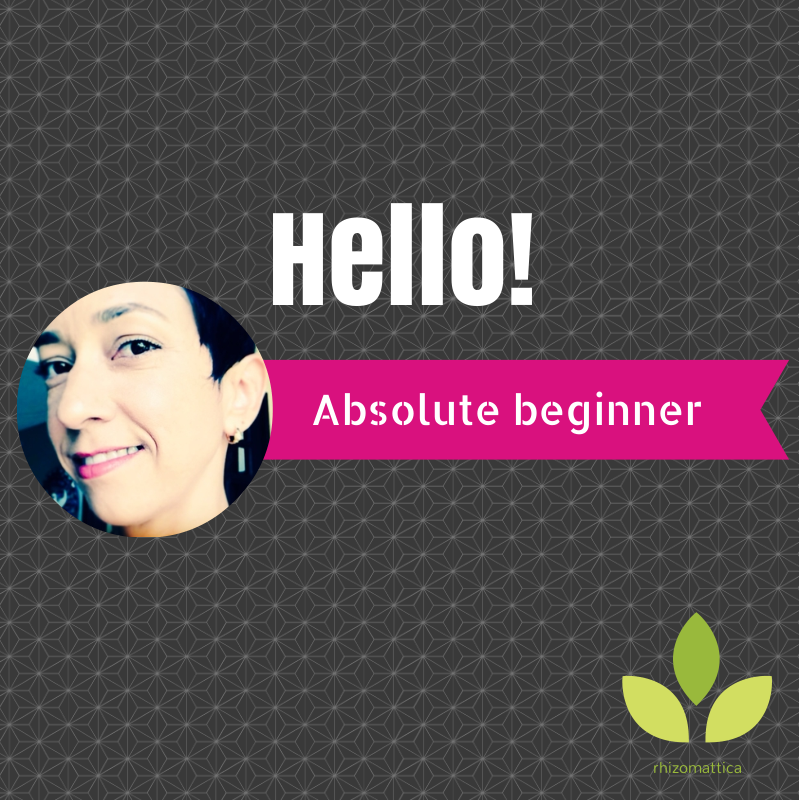
Absolute beginner

Books – them selfish creatures #rhizo14

Indian Headdress

Indian Headdress by John Dalkin (C) all rights reserved

Beauty is in the mind and soul of the bereader
Although reading a book might be a different experience every time you read it, it is still an alone experience. The different perceptions and insights we might have when reading the same book at different points in time are conjured up by the reader’s subjectivity, the fact that we are ever-changing creatures – inside and out. It is, nonetheless, an alone process. We could compare the experience to that of listening to a song being played in a very small room, and the sensory experiences that will ensue, and then playing that same song in a very large room, with entirely different acoustics. The sensory experience will certainly be a different one. The same music resonates differently in each scenario. Therefore, it could be said that it is the reader – the human element engaging with the print – that is dynamic, and not the print itself. In that sense, books are indeed limited/ing.
The old becomes the new again
There is a significant connection between ancient oral traditions and internet technology. Both systems operate via networks. There is something about the power of the eloquently spoken word. And its power exponentially increases when individuals experience the spoken word collectively. When a tribe elder gathers the young ones around a fire to tell them stories of their ancestors, I can’t help but wonder whether giving each of them a book containing the same stories would be as rich an experience. You see, it’s not just about the story itself, it’s also about the making of the fire, the way the young ones distribute themselves around the circle, with maybe the older ones sitting right and left of the tribe elder, it’s what they eat or drink during the gathering, it’s what they wear, and maybe, most importantly, it’s the coarse voice of their elder, telling them their own story almost musically, the tempo of the words, one after the other, and the curious questions that the young ones might ask, generating an increased understanding of their tribal identity, of their unity as a group – a network of people.
“As he looks back at archived tribal pictures and sees his young face in the crowd of elders, Pinkham, now 30, understands. ‘I realized it wasn’t something I waited for, it was the development of the mindset that goes along with our people,’ says Pinkham, tribal ethnographer for the Nez Perce Tribe.”    Wyatt Buchanan
Books – them selfish creatures
It may be that the internet – the inter(action) via the net(work) – purports just that connectivity among people, and that can be as powerful as the tribe gathering around the ritualized fire. It might be that once people truly realize how extremely powerful and transformational a tool the internet is in its core, the more digital literacy will become a reality in people’s lives. And that’s where ‘books’ is making us ‘stupid’. If we consider the ability to network, to successfully connect with other individuals and have one’s brain expanded by the learning that results from the engagement, as a critical element of digital literacy, then books might really be doing just that – making us ‘stupid’ in our isolation, alienating us from networking and (re)acquiring all of the necessary skills to thrive in today’s global tribe.
print books = linear  / person <alone>
networks = rhizomatic / people >together<
240px-Chief_Joseph-1877
“…let us put our minds together and see what future we can make for our children…”.
Nez Perce Chief Joseph
Reference nodes:
With much gratitude to photographer John Dalkin, who kindly granted permission for me to use his astonishingly beautiful fractal/photo. Thank you, John!

#Rhizo14 knock, knock

Fractal

Fractal by Hermann Kaser via Flickr (CC BY-SA 2.0)

Let me tell you a story. It’s the story of how I found you.

I found you while looking for myself. I found you via a very special network – my personal learning network.

Here’s how it went…

The Blue Bird Tweeted:

My dear friend and mentor, Carla Arena, shared this delicate gem via Twitter. A beautifully lapidated piece by a lady called Carolyn Durley. These words instantly struck a chord deep within:

Carolyn, being a teacher as myself, ventured into the universe of education and how ‘cheating’ may actually bring down walls and pedestals, from whose heights we – teachers – stand. We, teachers, the repositories of all knowledge. It might have been (and it most certainly was) through sweat and tears that we got to where we are in terms of acquired knowledge and experience, so our students should just endure the same hardships and be worthy of becoming – one day – knowledgeable. It was poetic. It was subversive. I had to pass it on to my personal learning network, among whom I was certain there would be those wo’d be moved/disturbed deep within. I RTed and I followed @c_durley down her rabbit hole. And then…

Enforced independence. Quite paradoxical, indeed, Carolyn. I was hooked and mesmerized by it all – the ideas, the sensations. We humans are naturally wired for movement forward, intrinsic motivation is in our very DNA. We, teachers, may foster independence, nudging our students forward, being role models of autonomy and independence ourselves. Not only as teachers, but as learners – as people. I felt compelled to jump in the discussion:

Imagem2

Carolyn and I became co-followers and co-readers of each others’ writings. I had been entangled by the rhizome that stemmed from A Fine Balance, and Twitter, and the entanglement continued.

And I ended up – literally – stumbling upon yet another gem. Had to share it.

And so it was that, another rhizo prospected that gem, and also ran into me.

impedagogy

I’d come full circle in the rhizome, just to find that it had spiraled into yet another branch, another rabbit hole.

I stared into its darkness, and asked rhizo-Dave: “Too crazy to leap, ya think?”

And then the next thing you know…

Rhizomatic learning is, for me:

  • non-linear learning
  • prospecting gems
  • ethnographic discovery
  • discovering how you’re wired
  • connecting with otherness and then with yourself
  • how I go about my professional and personal development in this brave new world of all things technological