The following is my version of a chapter in one of the books by Brazilian educational researcher Dr. Maria Cândida Moraes. The original work is in Portuguese, and apparently there are no English versions of her work available online. This is a personal work of translation which aims at sharing the extremely pertinent thought proposed by Moraes with my English-speaking community. I also felt compelled to engage in this translation, for it requires a certain density of understanding which I find extremely rich. In the words of Moraes herself:
“We know by experience that in all translation there is some betrayal, and that in all interpretation there is reconstruction by that who interprets. Pedro Demo (2000) comes to the rescue by saying that ‘hermeneutically speaking, knowledge never manages to stay the same, even if it wanted to. Transmitting is never just reproducing […] and all copy is, at least partly, also reconstructed’ (ibid.: 125)” ~ Maria Cândido Moraes
I hope you enjoy reading Moraes as much as I have.
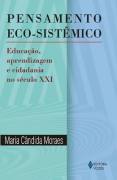 Part 3: The Eco-systemic Paradigm for Education (pgs 241 – 246)
Today we know that, adjacent to the roots of quantum, biological, and complex thought, there are epistemological seeds capable of grounding the process of knowledge construction, the development of learning, networked knowledge, self-organizational processes, autonomy, and creativity. These are seeds which can also influence human thought to develop towards a new way of constructing and reconstructing not only education, but also, and most importantly, a better repositioning of the learner/apprentice with regards to the world and life, providing a more adequate perspective of what reality is as well as the meaning of the individual’s own humanity.
The epistemological grounds provided by these theories strongly oppose the traditional causal model present in instructionist theories, at the same time offering some important pedagogical keys embedded in these macroconcepts and that, perhaps, might be better understood and explored by educators and science in general. Today, more than ever before, we have come to the realization that our school is reproductive, authoritarian, and autocratic in that it works with knowledge in its most linear approach, materialized in the teacher that talks and the student that listens and copies. The more aligned the student is with the teacher’s own linearity, the better his grades.
In reality, the theories approached here unfold the complex nature of knowedge and learning. They also reveal certain meaningful parameters, principles, and values which may serve the reconfiguration of a new educational scenenery and which may foster pedagogical practices that are more dynamic, integrating, complex, and holistic, and which thus require a greater conceptual clarity with regards to knowledge, learning, and the complexity involved in the educational processes.
Education, culture, and society are all complex systems, whose workings entail diverse areas of human knowledge, and which require a broader, more ample view of the solutions for their issues. We have an educational reality which is systemic and which, therefore, requires a treatment compatible to its nature.
This same complexity is present in the knowledge construction and learning processes, whose non-linear nature is seen in the interpretive processes which are dialogically complex because they are intrinsically reconstructive and productive, as explained by Pedro Demo (2000). We know by experience that in all translation there is some betrayal, and that in all interpretation there is reconstruction by the one who interprets. Pedro Demo (2000) comes to our rescue by saying that “hermeneutically speaking, knowledge never manages to stay the same, even if it wanted to. Transmitting is never just reproducing […] and all copy is, at least partly, also reconstructed” (ibid.: 125).
However, we know that such comprehension is not easy, especially to those educators who are accustomed to grouding their work in specific theoretical references. In every day life, a majority of people is also used to perceiving and interpreting the world from the perspective of classical physics, which apprehends the visible reality as being structured, stable, and most events as predictable, predetermined, and rationality being the state of mind best suited and most greatly used for the construction of technical-scientific knowledge. Nonetheless, we also perceive that physicists themselves stimulate, in their heated philosophical discussions, the possibility that there is something wrong in the materialistic realism founded on the notion that real objects are independent from subjects or from the way in which we observe them, thus signaling some epistemological developments (Goswami, 2000).
Today, it is no longer possible for us educators to ignore the epistemological implications of the scientific knowledge involving the concepts of self-organization, complexity, chaos, undeterminism, and non-linear dynamics which determine living systems. We notice that these macroconcepts or new themes, when allied with cognitive science (Varela et al., 1997), set forth a more challenging vision of the morphogenesis of knowledge, a non-linear vision of the dynamics of reality, which, more than ever, unveils the intricacies between cognition and life (Maturana & Varela, 1995). For these authors, living systems are cognitive systems, and life is a process of cognition. The interactions which take place within living organisms are aways cognitive interactions that are built upon the very flow of life. It is in this flow of life that, upon actions and reactions, we shape our world and are shaped by it. From this structural imbricacy, subject and world emerge together. And what is the meaning of that for education?
We have come to realize that this theoretical reference corroborates to a better understanding of the complex bio-psycho-sociogenesis of human knowledge, as explained by Hugo Assmann (1998). In this view, one acknowledges the evolutionary trajectory or the presence of heredity in the constitution of human beings, associated with the diverse environmental contexts in the way human competences develop and evolve.
From Biology, we have learned that each learner possesses his own structural dynamic, which is unique and untransferable, and which does not admit replication. It is something constitutive of his personality, of his ways of being, of learning and of ‘feelthinking’ (Moraes & Torre, 2002). It is, after all, something inherent to the learner’s way of knowing and being in the world. By the same token, inspired by Maturana, we know it is from the congruence between his structural dynamic and his historical-cultural journey that the individual is capable of interpreting reality and of realizing his own humanity.
From Physics, we understand that reality does not exist outside of the observer, which explains why we create the world in our image and likeness. From Physicochemistry, especially with Prigogine, we learn that equilibrium states, both in mechanics and in thermodynamics, resonate in biology as it does in society. Fluctuations resulting from both external and internal causes may result in new structures and, under certain circumstances, noise, disturbance, randomness, detours, and other conditions, morph into a source of order and renewal.
Which meaningful implications do these concepts suggest? One of them is the acknowledgement of motivation as the driving force of self-organizing processes, and that it depends on what takes place inside the system. Motivation is always endogenous, happening from the inside out. And to what extent is the cognitive dimension of the individual a part of the self-organizing dimension of life? If we consider the notions that “the whole is in the part which is in the whole” (Morin, 1995: 109), it becomes easier to undersatnd that the cognitive dimension also possesses a self-organizing dynamic, not only in relation to autonomy, but also in the individual’s actions upon the world around him, since autonomy depends on the group of the individual’s relations with his environment.
From this new theoretical framework, what is it to learn and to know? If we must define this paradigm more clearly, what are the dimensions which might be involved in this theoretical construction?
MORAES, Maria Cândida. Pensamento Eco-Sistêmico: Educação, aprendizagem e cidanania no século XXI. 2 ed. -Petrópolis, RJ: Vozes, 2008.


 Little did I know