Uncategorized

1st ATNU – Advanced Teacher Network Unmeeting

On February 6 I held a meeting with our In-Service Advanced Course teachers. My group of Supervisors had decided that it would be worthwhile to try a different approach to our In-Service meetings, which have traditionally been lectures containing announcements and information about course features, with an audience of teachers passively taking it all in. I wanted to engage teachers in reflection on their own practice, as well as tap into their beliefs and values as educators, so I gave them a challenge, a driving question that would sort of give some direction and purpose for the session. This was our driving question:

How can we adapt coursebook use in order to foster more meaningful learning experiences to our Advanced students?

In order to get teachers immersed in our context, they were asked to carry out a poster & post-its activity. They sat together in groups of five to six people at round tables in our Resource Center. Each group was given a poster containing three questions: who are our students? what are their needs? how might we meet their needs? Teachers were asked to brainstorm responses to those questions, writing their ideas/responses on sticky notes for each of the three questions. Once they had generated plenty of ideas, they went over their notes with their groups, selecting what they agreed to be the most relevant ones and placing those higher up on the poster. The atmosphere fired up with the buzz of nearly ninety people talking, exchanging ideas, interpreting their findings together.

Now that they had brainstormed and discussed their teaching/learning context, they had a vivid, dynamic image of their students in mind, as well as their challenges in their everyday teaching practice. The next stage would take them closer to the topic addressed in the driving question – coursebook use and adaptation. For this stage of the session, I had reccommended (a few weeks before the session) that teachers read a post written my me on the subject of materials adaptation. The idea was to give them some theoretical and methodological references to help them shape their contributions and reflect on their materials’ use so far in the piloting stage. Each group accessed a Google Doc, which I had previously created especially for this meeting, where they would be guided in their reflection and suggestions for making the best of the coursebook we are currently phasing in in our Advanced Course.

Before we finished the session, once groups of teachers had finished editing their Google Docs, they were asked to leave an exit ticket, sharing their impressions of the session. I will now share some of their responses, sharing some of my reflections triggered by their feedback.

“I think this session was very interesting for learning and suggesting improvements for the advanced course. Sharing experiences with more experienced teachers, was also fantastic.”

This was definitely a concern of mine when planning the session: creating opportunities for teachers with different backgrounds and classroom experience to work together and engage in meaningful discussion. I was hopeful that this kind of heterogeneous collaboration would produce interesting learning for all involved, regardless of how experienced they are, or whether they are new teachers at our institution.

“It was great to have this opportunity to share experiences and generate new ideas with other advanced teachers. The discussions we carried out today will help me plan my lessons and adapt the course materials this semester.”

Hopefully, a great number of teachers was able to take something practical from the session. The fact that they were asked to collaborate in order to carry out the tasks proposed naturally led teachers to share experiences and tacit knowledge, which is especially valuable for those teachers starting out. It’s also a positive way to make the institutional culture known among the people – teachers – who directly contribute to (re)creating it every day, in and out of the classroom.

“it’s important to get someone to keep group on course or discussions become very general rather than specific…” 

This was also an experiment in teachers’ capacity for self-directed, self-managed collaborative work. Some groups seemed to manage to keep on track, being highly productive, whereas others seemed to lag, getting sidetracked in long discussions. This is, therefore, a valuable suggestion for future sessions. I should point out, though, that I feel it’s only natural that it so happens, especially when we are beginning a shift from sessions centered on one person transmitting the information to a hundred passive listeners, to decentralized, collaborative (and often times messy) work among different individuals.

“This was a very hands-on meeting which was very productive. We have had the opportunity to share many ideas and impressions related to the advanced series. There was active participation and a thorough exchange of ideas/concerns/experiences.”

“I really enjoyed the way that this meeting was planned as it allowed us to participate actively and to go deep into the topics discussed. It was also very nice to get to know my colleagues better and to find out their ways to teach the advanced course.”

My two takeaways from these two quotes are hands-on and participate actively. One of my core goals was to have teachers go beyond the generation and discussion of ideas by actually getting them engaged in making something. For me, the posters and the docs they created as a result of their negotiations are valuable iterations of collective knowledge.

“I think this was a very interesting attempt at dealing with such an overwhelming topic. I find the session would’be been more effective if we didn’t need to go through the warm up stage in the meeting.”

This comment has given me some insight on the issue of timing. It had been my idea not to spend too long on the poster & post-its stage of the session. I must confess, nonetheless, that I myself lost track of time at certain points of the session, since discussions seemed to become denser and denser by the minute. This suggestion also reflects a concern I mentioned above, regarding the different teacher backgrounds and levels of experience. A very experienced teacher, having been immersed in the Advanced Course context for a long time, might have been ready to dive into the second stage of the session right away. My takeaway here is differentiation. How might I be able to differentiate without alienating, and still keeping it productive?

There were 43 exit tickets total. Below are a few other comments (highlights are mine and will hopefully speak for themselves):

“it was interesting to share opinions and discuss the questions. i felt there was a sense of focus and that our group feels more ready to tackle this semester. a great way to have the ‘meeting’.”

“A profitable and organized session! I actually had new ideas and heard nice ideas from peers!”

“I much prefer this over the traditional meeting. I think the activity was fantastic for generation of ideas. It was very focused and could have been more productive if people kept the conversation on task.(…)”

“The discussion was relevant and productive. Thank you for the opportunity. I’m looking forward to our next meetings.”

“Very organized and productive!!! I was glad you opened a channel for us teachers to express our real concerns about the book. Hope we find our way out of the main problematic situations.”

“The session was thought- provoking and insightful. The steps were clear and meant to fit a very demanding audience. The group discussions were interesting throughout the session. Most of all, it gave room to the ” Thank God I’ m a teacher” feeling we need in the beginning of the semester!

I will end this post here, for it’s already quite long, but I’ll be coming back to this session in future posts where I hope to explore the richness of content generated and beliefs shared by this amazing group of teachers.

I take this opportunity to thank each and every teacher who participated in this session for their commitment to their own professional development, and to being eager to provide meaningful learning experiences to our students. Thank you.
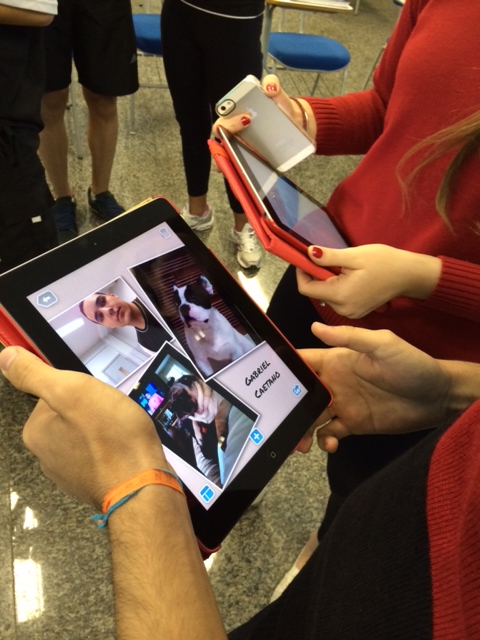

Tablets na sala de aula

photo 1 (2)

Foto: Clarissa Bezerra

NOVOS ‘SABERES’ E NOVOS ‘FAZERES’

Segundo MORAES (2002), novas ferramentas e instrumentos causam mudanças culturais ao propiciar novas formas de fazer. Com novas formas de fazer, surgem novas formas de pensar esse fazer, gerando mudanças no saber. Diferentes tipos de tecnologias intelectuais estimulam diferentes dimensões cognitivas, ativando com mais frequência e/ou intensidade partes específicas do cérebro. Em decorrência disso, enfraquecem-se determinados estilos de saber derivados de outros modos de acesso e processamento de informação.  Percebendo essa tendência do processamento cognitivo diferenciado dos alunos pertencentes à nova geração, diversas escolas estão adotando o uso dos tablets para fins educacionais.  

Existe nos dias de hoje uma ampla discussão acerca da defasagem da educação tradicional, especialmente no que diz respeito à perspectiva dos jovens da ‘geração digital’. Para SACCOL et al (2011), o aluno de hoje já não consegue fazer sentido na maneira como a educação tradicional se estrutura, centrada no professor e desenvolvida de forma linear com base em texto e aulas expositivas. “A nova geração está costumada a agir em vez de passivamente assistir (…) Em vez de simplesmente absorver conteúdo, essa é uma geração acostumada a produzi-lo, tanto individualmente quanto em grupo, e compartilhá-lo em redes sociais.” (ibid p.21) Nessa perspectiva, a utilização de tablets para fins educacionais oferece um imenso potencial de engajamento por parte do aluno ao propiciar experiências de aprendizagem por meio de uma mídia digital que permite um tipo de interação com a informação que corresponde de maneira mais pessoal, e por que não dizer prazerosa, com a forma com a qual o jovem tem acesso à informação no mundo atual.

No entanto, não basta que haja uma mudança somente de ferramenta, nem mesmo uma mudança somente na maneira como o aluno entra em contato com a informação, ou conteúdo curricular. É necessária uma mudança mais profunda de paradigma educacional, de maneira que evoluamos em direção a uma abordagem mais complexa e menos linear, ou cartesiana (MORAES, 2002), do processo de ensino-aprendizagem. Um componente importante dos saberes do professor (TARDIFF, 2002) é fazer com que qualquer material, seja ele impresso na forma de um livro ou apostila, ou outro tipo qualquer, ganhe vida no processo de ensino-aprendizagem. O professor é o elemento humano responsável pela mediação pedagógica que deve acontecer entre aluno e conteúdo, que nesse caso acontece por meio de uma interface digital, de maneira que a informação se torne conhecimento para o aluno por meio da experiência de aprendizagem significativa (AUSUBEL, 1965). É por isso que GABRIEL (2013) defende que “(…) o principal investimento deve ser feito em pessoas para capacitá-las e educá-las para esse cenário. (…) Tecnologia não é diferencial, mas o modo como a utilizamos, sim.” (ibid, p.7) Sendo assim, a formação continuada do professor segue tendo um papel preponderante na qualidade da experiência de aprendizagem do aluno.

FORMAÇÃO DOCENTE CONTINUADA

A capacitação dos professores para utilização efetiva de conteúdo por meio de plataformas digitais exige, entretanto, uma apropriação mais pessoal por parte do professor das tecnologias utilizadas. Um aspecto que torna essa apropriação problemática é o fato de que o professor de hoje não é um ‘nativo digital’, ou seja, ainda opera sob princípios e saberes advindos de tecnologias do conhecimento antigas, normalmente aquelas que foram utilizadas quando ele mesmo foi aluno. Esse aspecto torna o treinamento para a utilização efetiva dessas novas ferramentas um grande desafio para esses profissionais, desafio esse que deve ser conquistado se quisermos evitar continuar “otimizando o péssimo” (MORAES, 2002) ao utilizar novas tecnologias apoiadas, no entanto, numa visão pedagógica tradicionalista e instrucionista, na qual o aluno permanece passivo no processo de aprendizagem. Ainda segundo MORAES,

quotation1

O fato de integrar imagens, textos, sons, animação, e mesmo de interligar informação em sequências não lineares, como as atualmente utilizadas em multimídia e hipermídia, não é garantia de boa qualidade pedagógica e de uma nova abordagem educacional. Programas visualmente agradáveis, bonitos e até criativos podem continuar representando o paradigma instrucionista ao colocar no recurso tecnológico uma série de informações a ser repassada ao aluno. Dessa forma, continuamos preservando e expandindo a velha forma como fomos educados, sem refletir sobre o significado de uma nova prática pedagógica que utilize esses novos instrumentos. (ibid, p.16)

Segundo o NMC Horizon Report, o desenvolvimento profissional contínuo é condição sine qua non para que alcancemos altos níveis de qualidade do processo de ensino-aprendizagem por meio do uso de tecnologias digitais. Esse tipo de treinamento precisa ser valorizado e se tornar parte da cultura das escolas. Os professores precisam desenvolver as habilidades necessárias para integrar os recursos tecnológicos de maneira efetiva, tornando a experiência de aprendizagem ainda mais significativa para os alunos.

APRENDIZAGEM UBÍQUA E COM MOBILIDADE

O uso de dispositivos móveis, tais como os smart phones e tablets, para fins educacionais constitui um grande desafio para as práticas docentes atuais. Por todo o mundo, educadores e pesquisadores na área de educação têm se debruçado sobre o desenvolvimento de metodologias didático-pedagógicas que possam incorporar o uso desses dispositivos de forma a explorar todo o seu potencial de mobilidade sem, no entanto, perder de vista valores centrais que informam as boas práticas docentes que colocam o aluno e sua experiência de aprendizagem no centro do planejamento e das ações pedagógicas. É nesse contexto que se fundamentam os conceitos de mobile learning ou m-learning (aprendizagem com mobilidade), e ubiquitous learning ou u-learning (aprendizagem ubíqua).

Para que o planejamento e as ações didático-pedagógicas possam propiciar aprendizagem de qualidade, é imprescindível que tenhamos conhecimento dos diversos benefícios e potenciais, assim como das limitações, desses tipos de aprendizagens. SACCOL, SCHLEMMER e BARBOSA (2011) fazem uma exposição detalhada desses aspectos no quadro 1.1 (ibid, p. 34 e 35), do qual escolheremos aqueles mais relevantes para o cenário da escola em questão.

ALGUNS BENEFÍCIOS E LIMITAÇÕES

O primeiro benefício do m-learning e u-learning é a flexibilidade em termos de local e horário em que a prendizagem pode ocorrer. No entanto, segundo SACCOL et al, pode haver limitações de tempo disponível ao aluno para desempenhar as atividades, assim como pode ser limitada a própria quantidade de conteúdo a ser coberto pelo aluno. No presente contexto, o aluno faz uso de um material didático desenhado e desenvolvido para ser acessado pelo tablet. O professor pode extrapolar esse conteúdo, compartilhando outros recursos pertinentes aos conteúdos curriculares, direcionando os alunos a simular ou aplicar conteúdo teórico em situações práticas ou por meio do uso de recursos digitais tanto do próprio material quanto daqueles existentes online. Para tanto, faz-se necessário que o professor busque desenvolver suas habilidades de curadoria digital, explorando as possibilidades da Internet e o vasto universo de conteúdo que se encontra à disposição de todos aqueles que a ela tem acesso. Ainda na dimensão da flexibilidade, podemos explorar também aquela referente à aprendizagem de campo, fora do ambiente da sala de aula. Essa liberdade de movimento por parte dos alunos promove grandes potenciais para experiências de aprendizagem significativa, favorecendo ainda aqueles alunos que se beneficiam do movimento corporal, por exemplo, para dar maior significado ao seu aprendizado.

Outra dimensão do m-learning e u-learning que consideramos como um de seus maiores benefícios é a personalização da experiência de aprendizagem da qual decorrem outros aspectos importantes, tais como o engajamento, a autonomia e a criação de conteúdo por parte do aluno.  São inúmeras as possibilidades de engajamento em pesquisa propiciadas pelos dispositivos móveis conectados à Internet. Os alunos podem ser direcionados a exercitar e desenvolver suas habilidades de pesquisa ao buscar conteúdos pertinentes ao que se está aprendendo no currículo, ou conteúdos que beneficiem e enriqueçam as discussões de sala de aula. Tais dinâmicas de pesquisa e aprendizagem podem ser ainda mais valorizadas por meio da colaboração e do compartilhamento do conteúdo curado ou criado pelo próprio aprendiz, agregando valor ao seu trabalho a partir do momento em que ele pode ser desenvolvido para uma audiência real, constituída de seus pares, professores, familiares e quaisquer outros indivíduos com quem possa conectar.  Tomemos como exemplo a possibilidade de um aluno poder dividir uma resenha crítica de sua autoria com o próprio escritor da obra estudada. É perfeitamente possível hoje em dia essa conexão por meio das mídias sociais, a exemplo do Twitter.

Diante de tantas possibilidades proporcionadas dentro do contexto do m-learning e u-learning deve-se sempre manter o foco no aluno e nos objetivos da aprendizagem, já que o apelo estimulante da exploração dessas tecnologias pode resultar num foco excessivo na tecnologia (tecnocentrismo), razão pela qual voltamos a enfatizar a importância do treinamento continuado do corpo docente de forma a assegurar o foco central das práticas pedagógicas adotadas nos objetivos reais de aprendizagem.

REFERÊNCIAS BIBLIOGRÁFICAS

AUSUBEL, D. A cognitive structure view of word and concept meaning. In R.C. Anderson e D. Ausubel.Readings in the Psychology of Cognition. New York: Holt, Rinehart and Winston, 1965.

DIAMANDIS, Peter H. KOTLER, Steven. Abundance: the future is better than you think. New York: Free Press, 2012.

GABRIEL, Martha. Educar: a revolução digital na educação. São Paulo: Saraiva, 2013.

GARDNER, Howard. Inteligências múltiplas. A teoria na prática. Porto Alegre: Artmed, 1995.

JOHNSON, L., ADAMS BECKER, S., CUMMINS, M., ESTRADA, V., FREEMAN, A., LUDGATE, H. NMC Horizon Report: Edição K-12 2013. Tradução para o português pela Ez2translate. Austin, Texas: The New Media Consortium, 2013.

MERIJE, Wagner. Mobimento: educação e comunicação mobile. São Paulo: Peirópolis, 2012.

MORAES, Maria Cândida. O Paradigma Educacional Emergente. Campinas: Papirus, 2002.

SACCOL, Amarolinda. SCHLEMMER, Eliane. BARBOSA, Jorge. M-learning e u-learning: novas perspectivas das aprendizagens móvel e ubíqua. São Paulo: Pearson Prentice Hall, 2011.

TARDIFF, Maurice. Saberes docentes e formação profissional. Rio de Janeiro: Vozes, 2002.

CLMOOC Make Log #1

ImageEver since Rhizomatic Learning or Rhizo14 came to an “end” (those of you in rhizo14 will get the inverted commas around end there), I have been moving on to the next thing in my life. So it appears that my next cmooc thing is shaping up to be CLMOOC, aka Making Learning Connected. I blame it on Rhizo14 anyway, since it was Terry Elliot, a fellow rhizoer, who sprayed in a bit of clmooc scent inside our rhizomatic zombie asylum on FB (yet another rabbit taking me down yet another rabbit hole. Cool!) I must confess, though, that I am approaching CLMOOC in a rather suspicious manner, as if I were about to make my best friend jealous by hanging out with a new friend who seems to be just as cool. (ok, ok, almost as cool!)  Anyway, inbued with a communal spirit, I decided to accept Anna Smith‘s invitation to participate in CLMOOC’s first hangout of its 2014 edition and give this new friend of mine a fair chance of winning me over.

I guess it worked.

I had been mulling over the theme for Make Cycle 1, browsing other participants’ makes on the G+ CLMOOC community (which hasn’t begun growing in me as of yet. I mean G+, not the community.), Twitter and FB. Even so, connecting with the group of CLMOOCers on the hangout yesterday was so meaningful, and that got me thinking about what ticks me as a learner. It’s important for me to feel that I am connecting with people, real people. And having a hangout like the one we had yesterday does give me a feel of being welcome within the community. Which takes me back to my experience in Rhizo14, and the very reason why it has become such an important thing for me. It’s all about the human connections, after all. Also, I guess that having a sense of audience, which was something that came up during yesterday’s hangout, knowing that there are people out there who are just as interested in being creative and learning together as you are.

CLMOOC officially launched on June 16th, with the release of the 1st make cycle, so it has been, what, four days? Just for kicks, here’s a short list of what I’ve have already learned so far:

  1. Terry Elliot shared a Spotify playing list with me on Twitter. I had never heard of Spotify. As a matter of fact, they have just launched here in Brazil, and I love it. I’m totally hooked. Thanks, Terry!
  2. Simon Ensor shared WordFoto with us. I’d seen those cool photos but never asked how to make them. Dowloaded the app. Playing with it. Love it. Thanks, Simon!
  3. My new friend Sheri Edwards came to the rescue when I cried out that I hated Google+ on the FB group. She taught me what that +1 button thingy do, and I finally got it! Yey! Not a big fan of G+ just yet, though. Let’s see if CLMOOC will change that. Thanks, Sheri!
  4. My new friend Christopher Butts shared his on-the-make make #1 with us yesterday in the hangout, showing us Thinglink. Had never heard of it. Looks really cool. Thanks, Christopher!
  5. My new friend Michael Buist mentioned during the hangout yesterday that he finds it hard to differentiate the types of Creative Commons licenses (so do I, Michael!), so another new friend Michelle Stein shared an a-w-e-s-o-m-e video tutorial, which I had never seen, and I have looked for something like that, I swear. Thanks, Michael for asking and Michelle for answering!
  6. Just this afternoon, during lunch with my cohort and dear friend Claudio Fleury, I briefed him about my latest cmooc adventures with CLMOOC, and he was kind enough to share stumble upon with me. Absolutely fabulous! Thanks, Claudinho!
  7. And I learned how to paragraph in FB comments. Ha! Thanks again, Terry! *Duh moment* 😉

…and it has only been four days? Okay. Quite promising, indeed.

Sooo, after yesterday’s hangout and my babbling about being all over the place with my mind and my need for silencing the noise from time to time, the Twitters began tweeting and I was suddenly hashtagged #mindfulness. Okay. There’s a thought. I have decided I will make a How to boost your mindfulness guide for make cycle #1. It’s still a bit jumbled up in my mind (as it should, right?), but it’s gradually shaping up into… a blog post, most certainly, and… imagery? Maybe… I will certainly explore some of the tools fellow CLMOOCers have been using and playing with. We’ll see. That’s cool. And I know that if I need some help, all I have to do is shout!

Oh, and Rhizo14 (jealously watching from a corner of the room)? Of course I will concoct a CLMOOC Make just for you. Because you’re so special. Rhizo14 risotto, anyone?

clmooctrip

a design for CLMOOC by Clarissa Bezerra (made with canva.com)